Intimate relationships can bring joy, comfort and support, but they can also bring complex challenges, especially for male survivors of sexual harm. At We Are Survivors, we recognise that relational issues are among the most frequent themes in therapy. From struggles with intimacy or sexual connection, to communication breakdowns, parenting tensions, or difficulty in resolving conflict, these relational difficulties not only affect the survivor, but ripple through their partnership, family life, and sense of wellbeing.
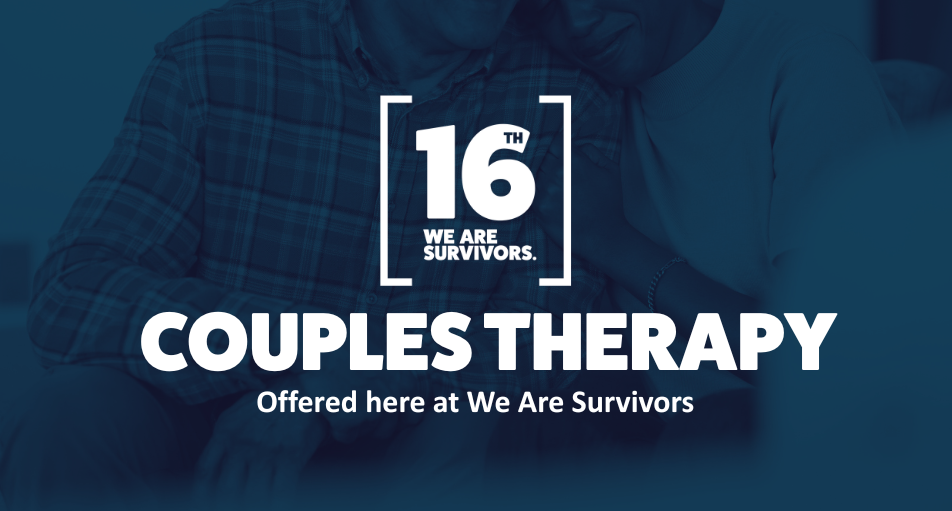
In response, we are proud to introduce a Couples Therapy pathway specifically designed for male survivors and their partners / loved ones. Our aim is to provide evidence-based, outcomes-focused relational support, so that both partners can find healing, growth, and better quality of life together.
Why couples relationships keep coming up
Over the years, feedback and qualitative data from our therapy sessions have shown that:
– Many male survivors report difficulties with intimacy, including sex, affection, closeness, and feeling safe or comfortable in physical connection.
– Communication is often strained, partners may misunderstand each other, fear saying the wrong thing, or feel unable to express their needs.
– Parenting roles and expectations can create tension, particularly when trauma impacts mood regulation, emotional availability, or trusted interaction.
– Conflict resolution becomes harder: conflict may escalate, be avoided, or leave wounds unhealed, especially when one partner is carrying trauma.
These are not isolated problems, they are themes that recur again and again in what people tell us. Supporting relationships therefore isn’t just an optional extra; it’s central to healing and recovery for many survivors.
Evidence and our commitment
As an organisation, We Are Survivors is committed to offering support that is not just compassionate, but effective. That means drawing on evidence-based approaches, measuring outcomes, and aligning with what male survivors say they need.
There is growing research showing that couples therapy can be a powerful intervention, particularly when depression or low mood is involved:
– A Cochrane Review (2018) of 14 studies (651 people) found that couples therapy may be as effective as individual psychotherapy in improving depressive symptoms, though the evidence is of low quality. It also found that distressed couples experience more reduction in relationship distress with couples therapy than with individual therapy.
– Meta-analyses and reviews (e.g. Barbato et al., 2008; “Couple therapy for depression”) also reveal that couples therapy reduces relationship distress significantly.
– Research shows that about 70% of couples receiving therapy for relationship distress show positive changes.
While we recognise that none of the evidence is perfect (sample sizes are often small; follow-ups not always long; diversity of participants variable), the overall message is clear: when relationships are under strain, couples therapy helps.
How our Couples Therapy works
Here’s what to expect from our Couples Therapy programme at We Are Survivors:
– Assessment & Goal-Setting Phase (approx. 4 sessions) – We begin with four sessions designed to understand the relationship in depth to map out where things are working, where difficulties lie, and what both partners hope to change. Some of these sessions will be together, and some individually (so each person can speak freely, and we understand both perspectives). By the end of these sessions, therapist + couple will have identified key themes and agreed goals for therapy.
– Focused Therapy Phase (approx. 16 sessions) – After the assessment, the main block of therapy begins. Over sixteen sessions, we work on the themes identified, intimacy, communication, parenting, conflict resolution, or whatever is most relevant to that couple. The work is collaborative, tailored to the couple’s needs, and outcome-oriented: we don’t use a one-size-fits-all model.
Mode: Face-to-Face or Online – We recognise that geography, mobility, anxiety, or other practicalities can make in-person meetings difficult. We offer both face-to-face sessions (where possible) and online therapy, so that couples can choose what works best for them.
Beyond Couples Therapy: Our wider offers
Accessing Couples Therapy doesn’t mean you lose access to anything else we provide. In parallel, or before/after therapy, survivors and their partners can still engage in:
– Peer support groups (connection with others who understand)
– Shared/individual activities for wellbeing and social connection
– One-to-one practical support (for example help with accessing services, navigating systems, safety planning, etc.)
We believe that relational therapy works best when it’s nested in a broader web of support—emotional, practical, communal.
What we hope this will mean
Our aim is that couples accessing this service will:
– Feel greater closeness and security in their relationship
– Communicate more openly, safely, and effectively
– Reduce low mood or depression symptoms connected with relational strain
– Improve capacity to resolve conflict without escalating or feeling stuck
– Rebuild or strengthen intimacy; physical, emotional, sexual, as desired by both partners
If you or your partner would like to find out more, or think Couples Therapy might be helpful:
– The service is free, funded through our support programmes.
– Available both online and in traditional face-to-face settings (depending on location).
– Email us at [email protected] and we’ll arrange an informal chat to explore whether this is the right pathway for you, and how to start.
Relationships are powerful. They can be a source of deep support and also a mirror, reflecting wounds and needs we don’t always know how to express. For male survivors of sexual harm, relational difficulties can be among the biggest and most painful of challenges. But they are also among the most meaningful places for healing to happen.
With this new Couples Therapy offering, We Are Survivors wants to walk alongside you not only as an individual survivor, but as part of a relationship, a partnership, a shared life. Together, with the right support, change is possible; connection is possible. If you feel this might help you and your partner, please do reach out.