24/7 Support Line
0808 500 2222
Office
0161 236 2182
24/7 Support Line
0808 500 2222
Office
0161 236 2182
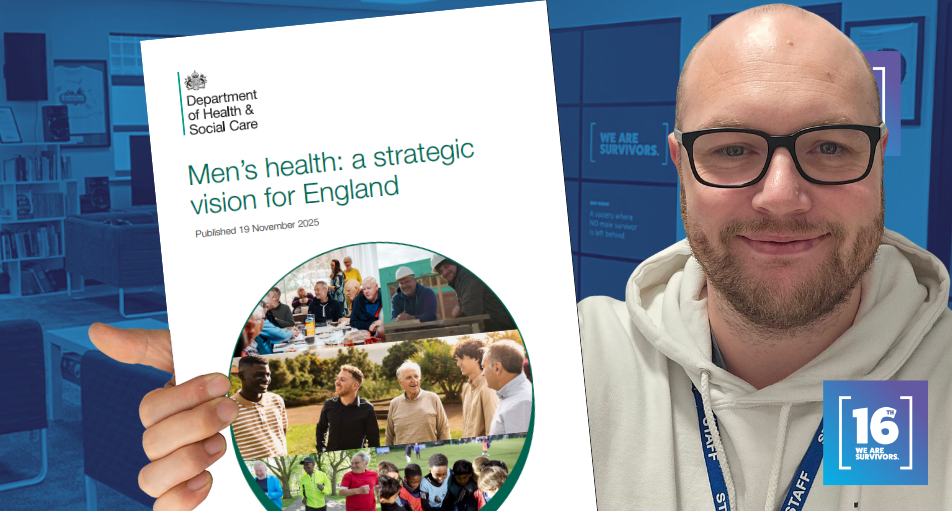
This time last week on International Men’s Day (19.11.25), the Secretary of State for Health and Social Care, the Rt Hon Wes Streeting, published the first ever Men’s Health Strategy which garnered high praise. Here at We Are Survivors, we were proud to play a part in the research by submitting data and opinions of male survivors, and we are ready to support the delivery of the strategy should we be called on.
Our Community Services Director, Caleb, grabbed a copy as soon as it was published and has been reading through to see what impact the strategy could have on male survivors. This is what he had to say:
I’ve been reading the government’s new Men’s Health: A Strategic Vision for England, and one thing stood out immediately: for the first time, a national health strategy openly recognises some of the scale of sexual harm experienced by men and boys. Our Policy Lead, Rory, did a lot of work in collating our response from We are Survivors in the evidence review, which I hope contributed.
The document references that at least 5% of boys experience sexual abuse before the age of 16, and that 0.7% of men experienced sexual assault in the last year. Anyone working in this field will know these figures barely scratch the surface. At We Are Survivors, our own data shows a far higher proportion of men coming forward with experiences of childhood sexual abuse, exploitation and other forms of sexual harm, often many years after the event. It’s important to remember we don’t require clients to report, so our data wouldn’t always be reflected in police/ONS data.
What I welcome most is the acknowledgement that many men delay disclosure because of the pressures and expectations tied to masculinity. We see this constantly: men feeling they must cope alone, minimise what happened, or avoid speaking out for fear of judgement. Naming this barrier in a national strategy feels long overdue.
It’s also important to be clear on something that can easily get lost in these discussions. While men can and do perpetrate sexual harm, being a victim does not make someone more likely to go on to perpetrate. Trauma isn’t destiny. With the proper support, people recover, rebuild and thrive, and many of the survivors we work with demonstrate that every day.
The strategy makes several commitments that, if followed through, could make a real difference: better safeguarding training across the NHS, more focus on research into male victimisation, and a genuine attempt to close the gaps in support for men and boys affected by sexual harm.
For those of us in the sector, it’s encouraging to see male survivors finally being recognised at a national level. The challenge now is turning this recognition into meaningful change.
You can read the full strategy here – Men’s Health Strategy for England – GOV.UK
I would be really interested to know what others think, what more could be added for male survivors?














Helpline: 0808 800 5005
X